
Learn
Short videos and guides on choosing gear, sizing a paddle, and stand up surfing in North San Diego. Everything here comes out of conversations we have on the shop floor — if you have a question we haven't covered, call us at (760) 602-9767 and we'll probably make a video about it.
Surf etiquette for stand up surfers
Stand up surfing had a rough start in the lineup, and in some spots it still does. A SUP is bigger, catches waves earlier, and is more visible — which means the mistakes are more visible too. The fix isn't staying home. It's knowing the rules better than everyone else out there.
This is the series we point every new customer toward, whether they bought a board from us or not. Blend in, take your turn, and you'll be welcome anywhere.
- Right of way — who owns the wave, and why dropping in is the unforgivable mistake
- Where to sit — finding the peak without parking on it, and why the shoulder is your friend as a beginner
- Knowing your turn — how a lineup rotates, and how to wait without becoming invisible
- Paddling out — the route that keeps you out of everyone's way
- SUP-specific — leash discipline, board control in a crowd, and why catching everything is the fastest way to make enemies
- Reading the room — picking the right break for your level, and when to paddle somewhere else
9 guides
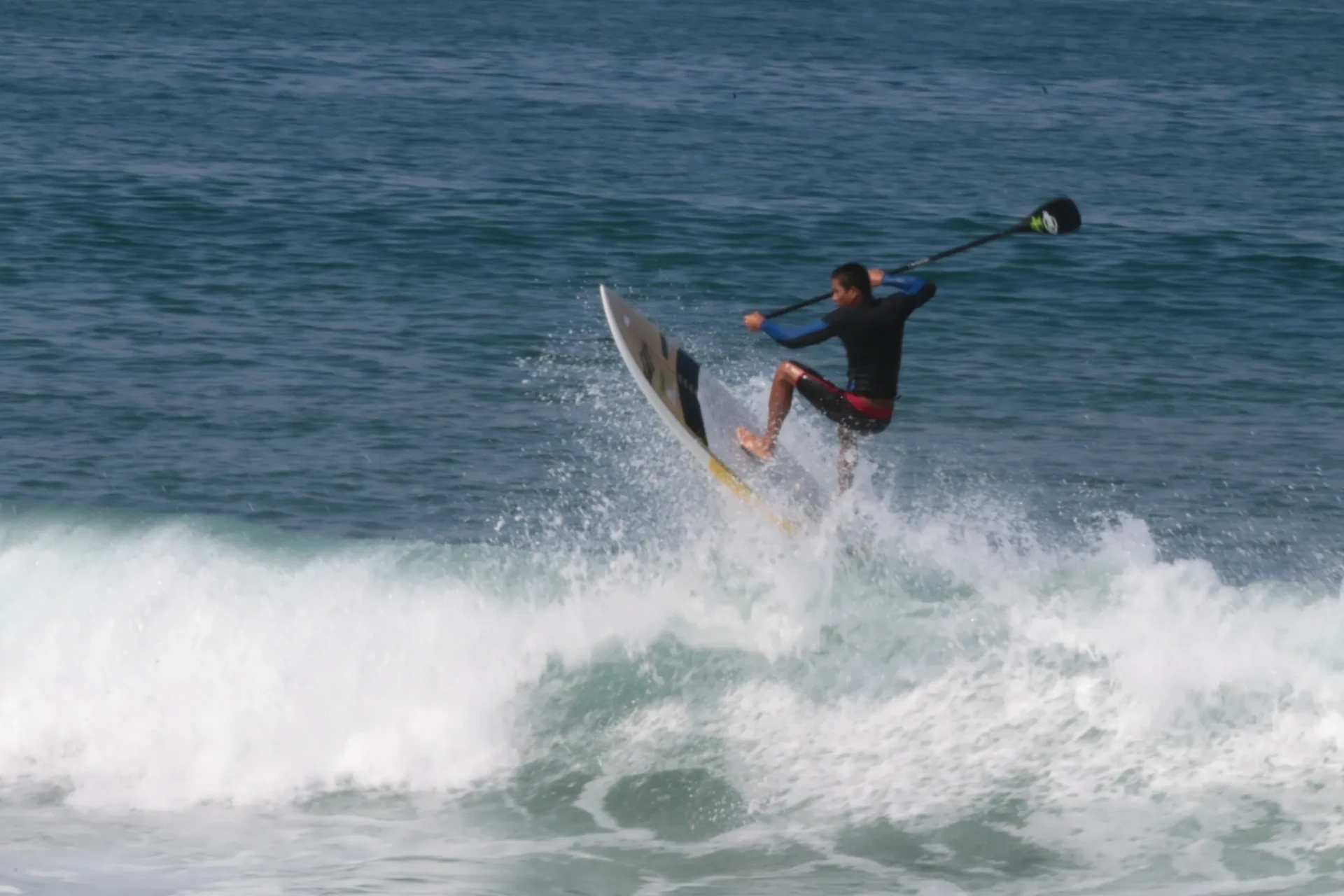 GuideSurf etiquette
Surf etiquette: the rules that matter
Right of way, dropping in, and snaking — explained on the water rather than on a whiteboard. Watch this before your first session in a crowd.
Read guideClose guide
GuideSurf etiquette: the rules that matter
Right of way, dropping in, and snaking — explained on the water rather than on a whiteboard. Watch this before your first session in a crowd.
Read guideClose guideThe surfer closest to the breaking part of the wave generally has priority. Look both ways before committing, and never take off in front of someone already riding. When the situation is unclear, let the wave go.
Don't paddle around someone to take the inside position just as a wave arrives. Take turns, communicate clearly, and give other surfers room. Being able to catch a wave earlier on a SUP doesn't give you priority.
Keep your board under control and allow extra space around others. Choose a quiet break within your ability, and ask an experienced local if you aren't sure how the lineup works.
 GuideSurf etiquette
Where to sit in the lineup
How to find the peak, why beginners should start on the shoulder, and how to wait your turn without getting buried.
Read guideClose guide
GuideWhere to sit in the lineup
How to find the peak, why beginners should start on the shoulder, and how to wait your turn without getting buried.
Read guideClose guideWatch several sets from the beach before paddling out. Notice where waves start breaking, where surfers take off, and where people paddle back out.
As a beginner, stay away from the busiest peak. A quieter shoulder or smaller break leaves more room to learn, but don't position yourself in the path of someone riding from the peak.
Join the rotation rather than paddling straight to the inside. Keep looking around: currents, sets, and the lineup all move. If you can't comfortably control your board in the crowd, find more space.
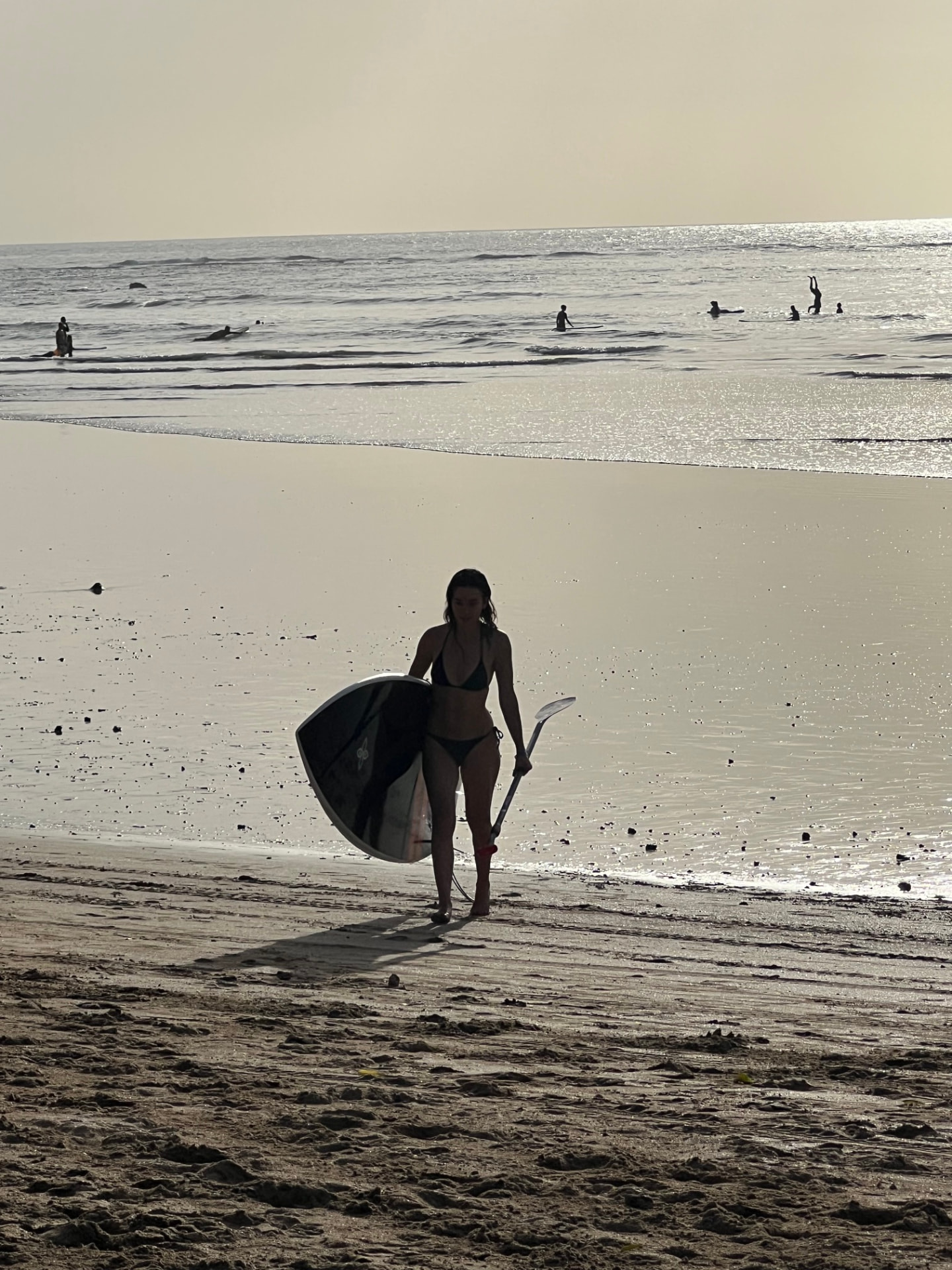 GuideSurf etiquette
SUP etiquette: sharing waves with prone surfers
A SUP catches waves earlier and takes up more room. Here's how to use that without taking more than your share — and how to be welcome in the lineup.
Read guideClose guide
GuideSUP etiquette: sharing waves with prone surfers
A SUP catches waves earlier and takes up more room. Here's how to use that without taking more than your share — and how to be welcome in the lineup.
Read guideClose guideYour standing view and early entry are advantages, not a reason to take every set. Let waves pass, respect the rotation, and leave space for surfers on smaller boards.
Avoid weaving through a crowded take-off zone. Your board, paddle, and leash need more clearance than a prone surfboard. Never let go of your board where it could hit someone.
A friendly greeting, a clear call, and an apology when you get it wrong go a long way. If a spot is too crowded for safe SUP surfing, paddle somewhere else.
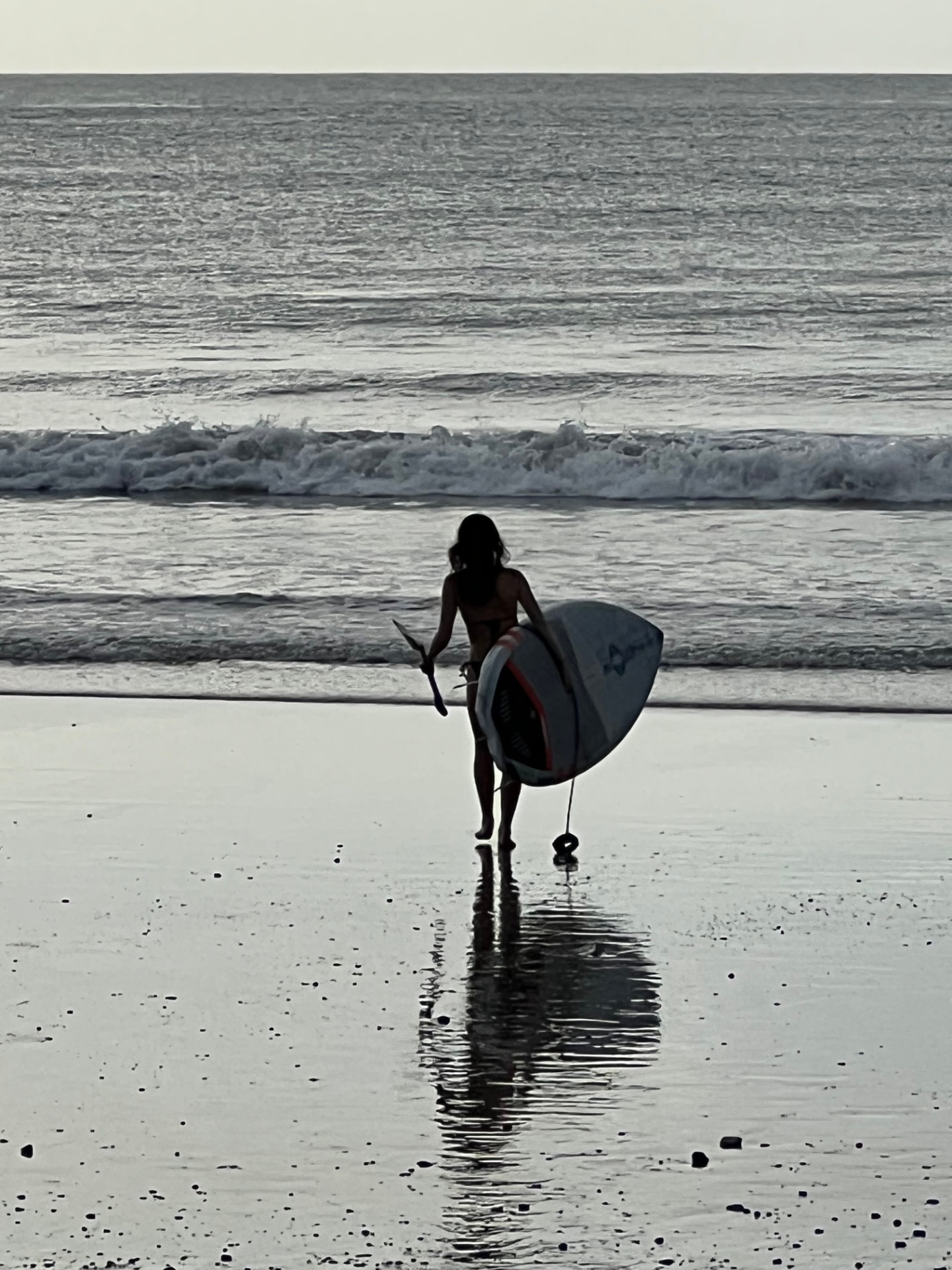 GuideSurf etiquette
Paddling out without getting in the way
The route around the break instead of straight through it.
Read guideClose guide
GuidePaddling out without getting in the way
The route around the break instead of straight through it.
Read guideClose guideBefore entering the water, identify a safe route away from the take-off and riding zones. Use a clear channel when one is available, and avoid paddling directly through the peak.
If a rider is approaching, don't race across their path toward the open face. Give them a clear line and move toward the already-broken whitewater when it is safe to do so.
Keep hold of your equipment and leave room for other paddlers. If the surf is beyond your ability to get out safely, stay on shore or choose a calmer spot.
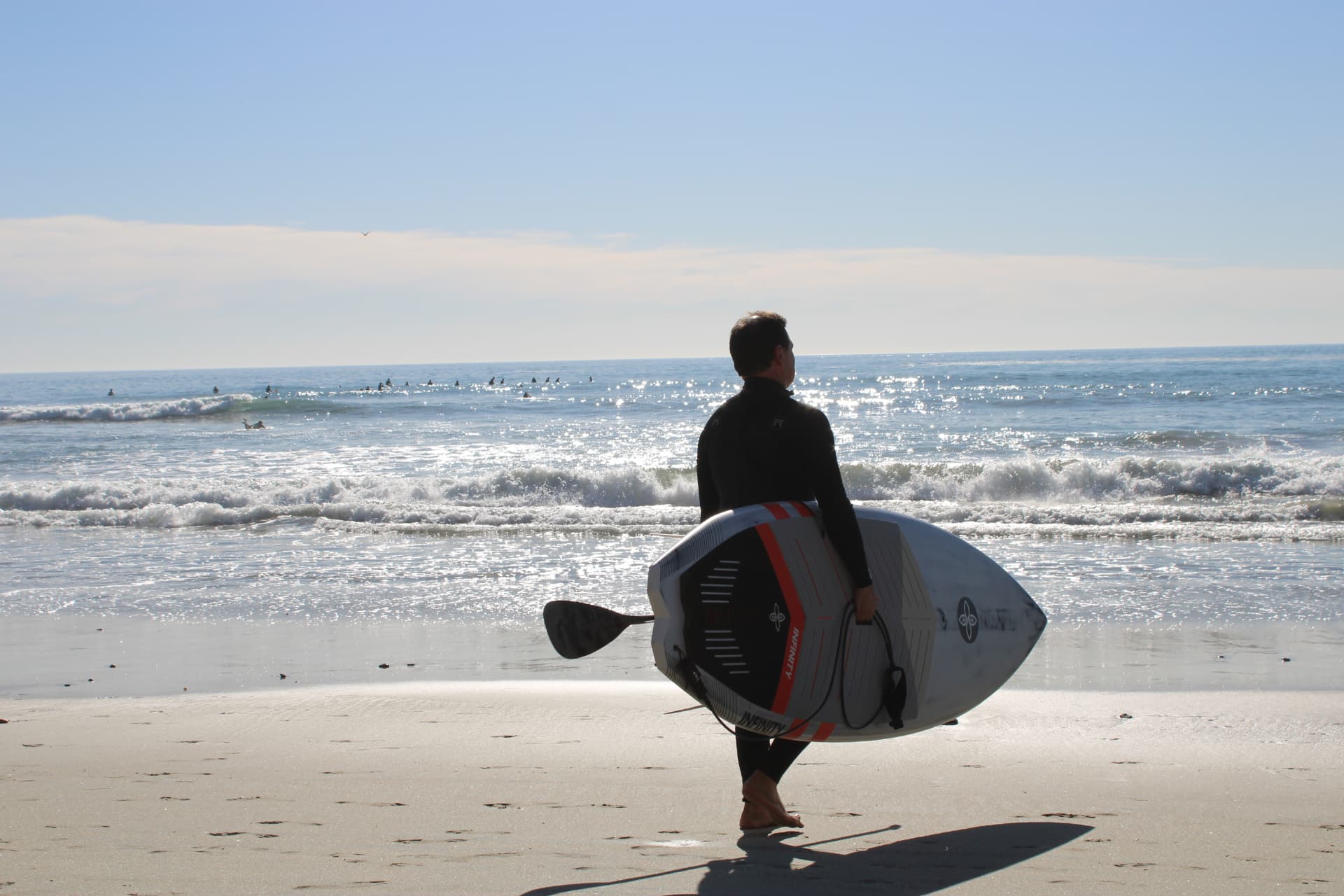 GuideGear guide
How to size a SUP paddle
Why the arm-over-the-head rule is a starting point, not an answer — and how stroke style and board volume change it.
Read guideClose guide
GuideHow to size a SUP paddle
Why the arm-over-the-head rule is a starting point, not an answer — and how stroke style and board volume change it.
Read guideClose guidePaddle length depends on your height, board, stance, and the paddling you do. Flat-water cruising often suits a longer paddle than SUP surfing, where a shorter length can make transitions and quick strokes easier.
Try an adjustable paddle first. With the blade fully in the water, you should be able to make a relaxed stroke without reaching excessively or bending awkwardly. Adjust in small steps and compare how it feels.
Blade area and shaft flex matter too. A larger blade isn't automatically better: comfort and a sustainable stroke are more useful than a paddle that overloads your shoulders. Ask the shop before cutting a fixed-length shaft.
 GuideBoard comparison
Wide Speed vs Blurr V3
Same rider, same wave, two very different Infinity boards. What each one is actually for.
Read guideClose guide
GuideWide Speed vs Blurr V3
Same rider, same wave, two very different Infinity boards. What each one is actually for.
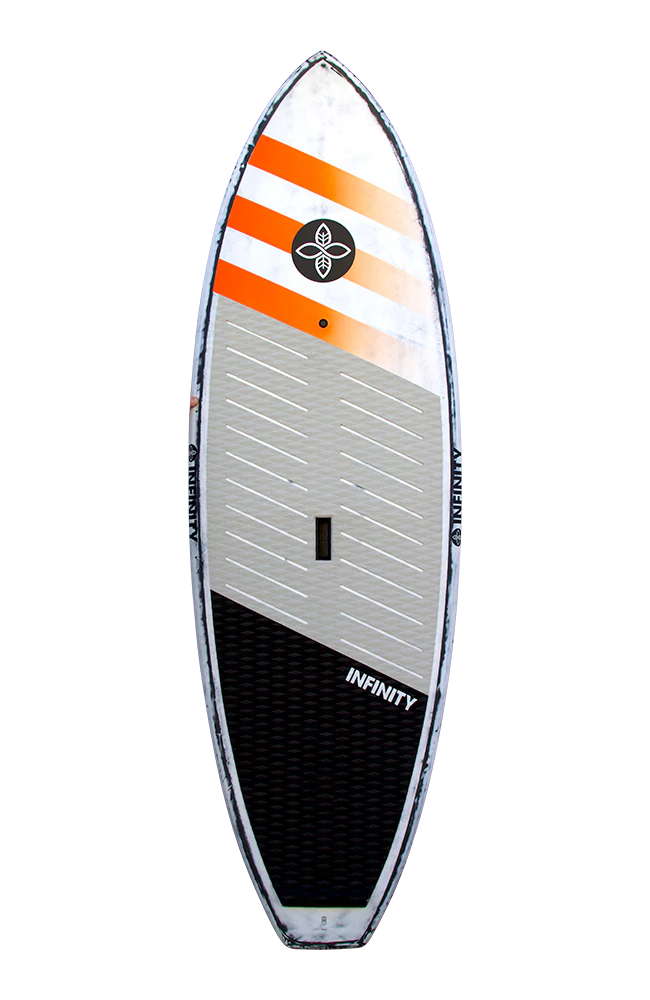
Read guideClose guideThe Wide Speed emphasizes a wider platform for stability with surf-oriented performance. It's worth considering if you want more confidence between waves without giving up the ability to surf.
The Blurr V3 is the more performance-focused choice for riders seeking responsive turns. Choosing the right dimensions is important: a performance shape that is too small can make waiting and paddling frustrating.
Compare your weight, experience, usual waves, and current board before choosing. A demo is the best way to feel the difference. Talk to the shop about available sizes and constructions.
Browse boards → GuideGear guide
SUP volume explained
What litres really measure, why weight isn't the whole answer, and how beginners end up on boards that are too small.
Read guideClose guide
GuideSUP volume explained
What litres really measure, why weight isn't the whole answer, and how beginners end up on boards that are too small.
Read guideClose guideVolume in litres describes how much water a board can displace. It helps you compare flotation, but it isn't a complete measure of stability or suitability.
Width, length, outline, rail shape, and how the volume is distributed all affect the ride. Two boards with the same litres can feel very different underfoot.
Allow for your weight, gear, balance, experience, and the water you'll paddle. Beginners generally benefit from more stability, not the smallest board they can stand on. Try a board and ask for a fit recommendation before buying.
 GuideShop
How our demo rental works
Ride the board before you buy it, and put 70% of the rental toward the purchase.
Read guideClose guide
GuideHow our demo rental works
Ride the board before you buy it, and put 70% of the rental toward the purchase.
Read guideClose guideA demo lets you try a board you're considering before committing to a new purchase. Availability is limited, so contact the shop to confirm the board you want to ride.
70% of the demo rental applies to the purchase of a new board, up to $100. Check the Lessons & Rentals page for current half-day and full-day options.
Tell us your usual conditions and what you want to improve. After the demo, share what felt good and what didn't so we can help you compare your options.
See demo rentals →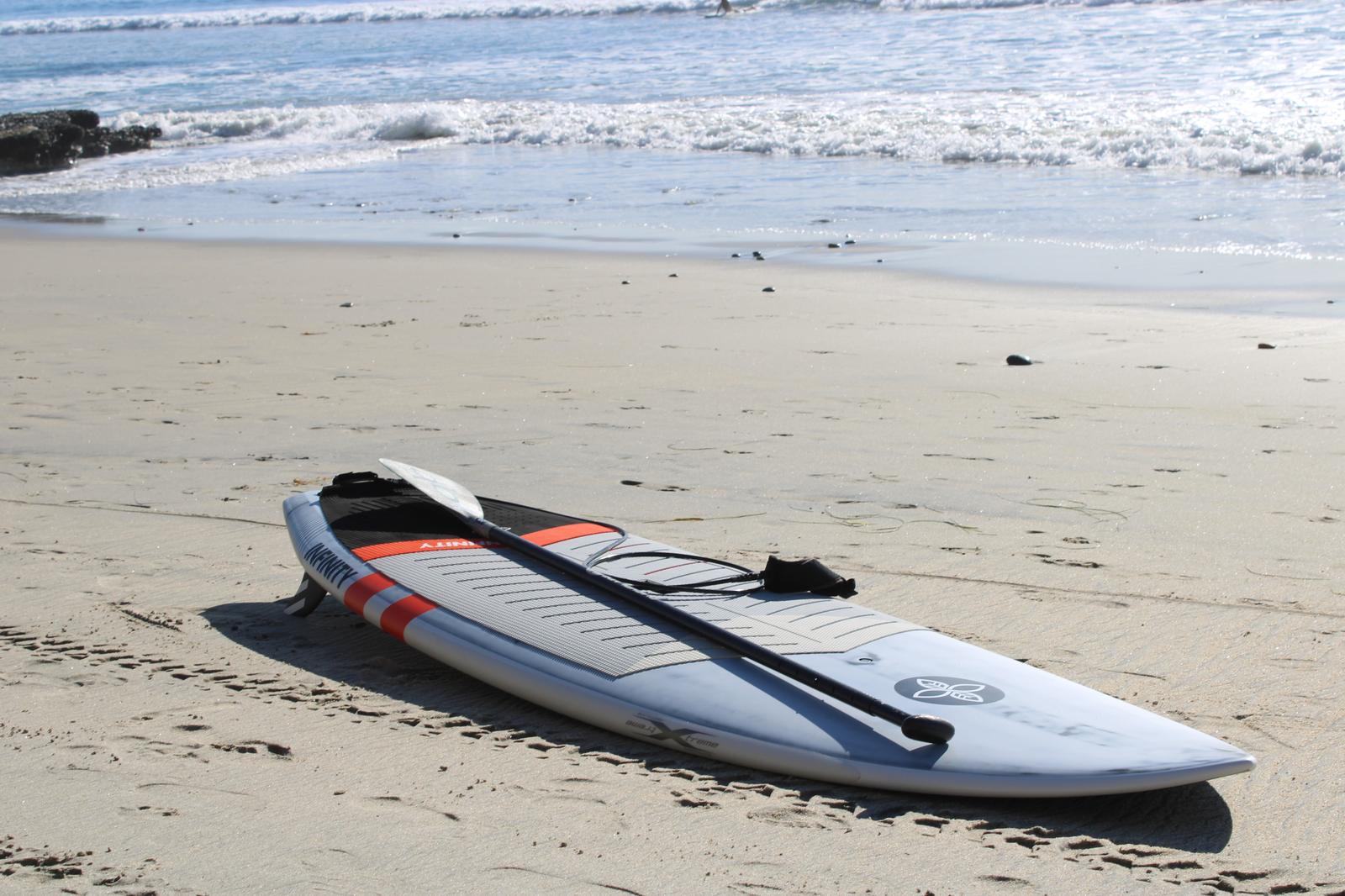 GuideLocal conditions
What's working at Ponto this week
A quick read on conditions and which board we'd grab today.
Read guideClose guide
GuideWhat's working at Ponto this week
A quick read on conditions and which board we'd grab today.
Read guideClose guideConditions change daily; this guide isn't a live surf report. Check a current forecast, tide chart, and local beach advisories before heading to Ponto, then watch the water in person.
Look at wind direction, swell size and period, tide, currents, and crowd levels together. Morning sessions often avoid stronger afternoon wind, but calm conditions are never guaranteed.
Choose a board and break that match your ability, not just the forecast. Call the shop for a current local recommendation, and don't enter the water if conditions or advisories make it unsafe.
Got a question we haven't answered?
Most of what we film starts as a question someone asked in the shop. Send yours over and it might turn into the next one.
Email the shop